


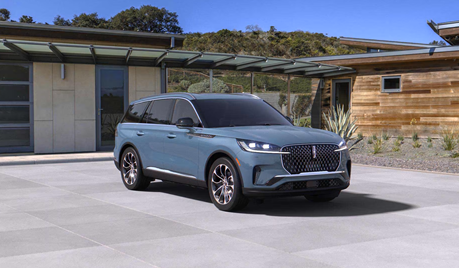
When buyers are seriously considering a luxury SUV, the questions that actually matter are whether it’ll start reliably five years from now, whether the technology holds up at 80,000 miles, and whether unexpected repair bills will quietly eat into the ownership experience. At Planet Lincoln Dallas Love Field, we hear those concerns every day, and the Lincoln Aviator holds up well against all of them.
This guide covers Lincoln Aviator reliability with honest, research-backed data: engine durability, maintenance costs, high-mileage performance, and long-term value. Whether you’re still comparing options or nearly ready to commit, we want you equipped to decide with confidence. Browse our new Lincoln Aviator inventory to see current availability while you research.
What Luxury SUV Buyers Actually Want to Know About Lincoln Aviator Reliability
RepairPal estimates the Aviator’s average annual repair cost at roughly $626, among the lowest of any Lincoln, and CarEdge projects a 10-year maintenance and repair total near $12,347, beating the luxury SUV average. Those numbers compare well against most European luxury competitors. With proper care, a well-maintained Aviator can reach 150,000–200,000 miles.
Early owner forums flagged infotainment glitches in 2020 models, though most of those issues have since been resolved through Lincoln Digital Experience software updates. Worth noting: these reports are anecdotal, not official data. If you come across an owner complaint about persistent tech issues, check whether the vehicle’s software is current before treating it as a hardware problem.
| Ownership Dimension | Lincoln Aviator |
| Warranty Coverage | 4-year / 50,000-mile bumper-to-bumper; 6-year / 70,000-mile powertrain; 5-year / unlimited-mile corrosion (perforation); 6-year / 70,000-mile roadside assistance. Black Label adds 4-year / 50,000-mile complimentary scheduled maintenance. |
| Maintenance Intervals | Lincoln-recommended service approximately every 10,000 miles (oil and filter, inspections), with synthetic oil specified for the twin-turbo V6 |
| MPG (EPA-estimated) | 18 city / 25 hwy / 21 combined (RWD); 17 city / 25 hwy / 20 combined (AWD) |
| Seating | Up to 7 passengers across three rows (second-row captain’s chairs or available bench) |
| Ownership Highlights | Standard BlueCruise hands-free highway driving (4-year plan included); standard adaptive suspension; Lincoln Pickup & Delivery with loaner; Google-based Lincoln Digital Experience; up to 77.7 cu ft maximum cargo |
Engine and Drivetrain Reliability: What to Expect Under the Hood
Twin-Turbocharged V6 Performance and Long-Term Durability
The standard engine is a 3.0L twin-turbocharged V6 producing 383 hp and 415 lb-ft of torque, paired with a 10-speed automatic transmission. Fuel economy is rated at 18/25 mpg (RWD) and 17/25 mpg (AWD). The transmission shifts cleanly under everyday conditions and handles torque delivery well, even when the Aviator is fully loaded.
Twin-turbo engines reward proactive maintenance. Turbocharger seals and intercoolers deserve attention as mileage climbs, and so do charge pipes. Owners who follow Lincoln’s recommended service intervals, roughly every 10,000 miles, consistently see strong performance well past 100,000 miles. Regular transmission fluid changes are a modest cost that protects drivetrain longevity over time.
Grand Touring Plug-In Hybrid Drivetrain Considerations
Lincoln discontinued the Grand Touring plug-in hybrid after the 2024 model year. If you’re considering a used Lincoln Aviator Grand Touring from 2020–2024, that PHEV system delivered 494 hp and 630 lb-ft of torque, genuinely impressive numbers, but it’s no longer available on current models. The 3.0L twin-turbo V6 is the only powertrain for 2025 and forward.
For used PHEV buyers, battery health management, regenerative braking checks, and software calibration all become part of the regular maintenance picture. Servicing this system correctly requires certified technicians with proper diagnostic tools. For any used Grand Touring purchase, a Lincoln Certified Pre-Owned vehicle or service through a qualified Lincoln facility is the smart call.
Lincoln Aviator Maintenance Expectations and Ownership Costs
Warranty Coverage and What It Includes
The Lincoln Aviator is backed by a 4-year/50,000-mile bumper-to-bumper warranty, a 6-year/70,000-mile powertrain warranty, and 5-year/unlimited-mile corrosion protection. Lincoln Black Label trim buyers receive 4 years/50,000 miles of complimentary scheduled maintenance. These terms are among the strongest in the luxury midsize SUV segment and say something real about Lincoln’s confidence in the Aviator’s durability.
Preventative Maintenance Habits That Protect Your Investment
The most effective way to protect long-term reliability is fairly straightforward:
- Follow 10,000-mile service intervals without skipping
- Use the specified synthetic oil grade, which is especially important for the twin-turbo V6 since it runs hotter than naturally aspirated engines
- Keep the Lincoln Digital Experience software updated to get ahead of known infotainment issues
- Inspect air suspension components after approximately 100,000 miles
- Have turbo-related components serviced by certified Lincoln technicians
- Maintain a complete documented service history to support resale value
For Dallas drivers, summer heat adds real stress to cooling systems, rubber components, and belts. Seasonal coolant and air conditioning checks aren’t optional here, they’re just smart Texas ownership habits.
Maintenance Cost Comparison: Aviator vs. Competing Luxury SUVs
The Aviator’s $626 average annual maintenance cost holds up well against German alternatives. BMW X5 owners typically pay $800–$900 annually, Mercedes GLE owners $850–$950, and Audi Q7 owners $750–$850. The Aviator’s Ford Motor Company platform contributes to more accessible parts pricing without affecting its luxury character, which translates to real savings over a typical ownership period.
For Lincoln ownership support, certified service, and maintenance scheduling, our team at Planet Lincoln Love Field handles everything from oil changes to complex powertrain work.
Technology and Interior Durability Over Time
Interior quality holds up well over time. Genuine wood inlays, premium leather seating, and metal trim resist everyday wear. The second-row captain seats with available heat, ventilation, and massage are a signature Aviator feature; keeping the tracks clean and free of debris extends their useful life considerably.
The Lincoln Digital Experience system supports over-the-air updates, so the software can improve post-purchase without requiring a service visit. Staying current on software versions is one of the simplest things an owner can do to keep the tech experience satisfying. Most infotainment complaints from early Aviator reviews were software-related and have since been addressed.
High-Mileage Ownership: How the Aviator Holds Up Long-Term
What to Expect Beyond 80,000 Miles
Well-maintained Aviators comfortably reach 150,000–200,000 miles. Suspension bushings, shock absorbers, and sway bar links typically need attention somewhere in the 80,000–100,000-mile range; that’s standard wear for any SUV at that point. Addressing those items proactively protects nearby components and keeps ride quality where it should be.
The transmission holds up well into high-mileage territory when fluid changes and cooler inspections stay current. A coolant flush at manufacturer-recommended intervals prevents internal scaling that gradually shortens the cooling system’s life.
The Aviator depreciates at 51.9% over five years, better than the luxury large SUV segment average of 54.3%. Reserve, Black Label, and Grand Touring trims tend to hold value more strongly because of their full feature sets. A documented service history meaningfully supports resale at any mileage.
Common Ownership Considerations to Plan For
Tire costs run higher than non-luxury vehicles given the larger diameter and performance specifications. In the Dallas area, heat and dust are the primary factors affecting longevity, so cabin air filter and cooling system maintenance deserve more attention here than in cooler climates. These are predictable realities that a realistic ownership budget can handle without any real surprises.
Lincoln Aviator for Texas Families and Daily Commuters
The Lincoln Aviator seats up to seven passengers with 16.5 cu ft of cargo space behind the rear seats and 77.7 cu ft with seats folded, a practical layout for families. The three-row configuration offers genuine comfort across all rows, not the compromised third-row space common in many midsize competitors.
For Dallas commuters dealing with highway driving and stop-and-go surface streets, the Aviator’s suspension calibration delivers a composed ride that absorbs road imperfections without feeling disconnected. Available adaptive suspension in higher trims actively adjusts to conditions, which makes a noticeable difference across the variety of surfaces around the Metroplex.
Lincoln Co-Pilot360 driver assistance comes standard and includes pre-collision assist with automatic emergency braking, blind spot monitoring, rear cross-traffic alert, and lane-keeping systems, all meaningful safety technology for family-oriented buyers.
Lincoln Aviator Ownership at a Glance: Pros and Cons
Pros of Lincoln Aviator Ownership
- The Aviator’s class-leading 6-year powertrain warranty and $626 average annual maintenance cost make it a compelling long-term ownership choice.
- Interior material quality rivals German luxury without the same service cost premium.
- The Aviator’s 77.7 cu ft maximum cargo capacity nearly doubles its closest competitor in this comparison.
- Second-row captain seats and Lincoln’s complimentary maintenance coverage round out an ownership profile that’s hard to fault for its intended buyers.
Cons to Consider
- Early 2020 models had documented infotainment glitches based on owner reports, though most have been addressed via Lincoln Digital Experience over-the-air updates.
- Fuel economy trails the German competitors in this segment.
- The plug-in hybrid Grand Touring trim, which offered 494 hp and 630 lb-ft of torque, was discontinued after 2024, which is a real loss for buyers who wanted efficiency alongside performance.
Explore Lincoln Aviator Inventory and Schedule Service at Planet Lincoln Love Field
The Lincoln Aviator makes a strong case on data alone: a 4.5/5.0 consumer rating, $626 average annual maintenance, a 6-year powertrain warranty that outpaces every major European competitor, and an expected lifespan of 150,000–200,000 miles. For Dallas-area buyers, we back that data with the resources and expertise to support it.
Planet Lincoln Love Field, located at 7767 Lemmon Avenue in Dallas, is the world’s largest Lincoln facility and a Premier Lincoln Black Label dealer offering private fittings, remote delivery, and complimentary care programs. Our service team is trained on the full range of Lincoln powertrains, including complex PHEV systems, and pickup and delivery service is available for owners who prefer it.
Explore our current Lincoln Aviator inventory and schedule certified service at Planet Lincoln Love Field. Reach us at (972) 354-5200 or visit in person. We’re open Monday through Friday, 7 AM to 7 PM, and Saturday, 7:30 AM to 5 PM.
Photo Courtesy of Lincoln
Connect with us


