


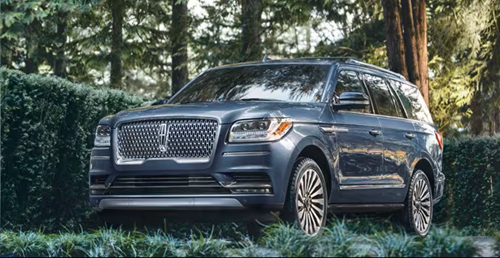
There’s no magic number that guarantees financing on a Lincoln. Approval comes down to a mix of factors: your income, credit history, debt-to-income ratio, down payment, and whatever guidelines the specific lender you’re working with happens to use. A higher score generally gets you better rates, sure, but buyers with all kinds of credit profiles finance Lincolns successfully every day. If you want to see where you stand before setting foot in a showroom, our online finance application will give you a clearer picture of your options.
Most lenders work off the FICO scale, which runs from 300 to 850, though auto lenders sort applicants into their own tiers rather than the general credit categories you might see elsewhere. Buyers near the top usually land the best rates, while those lower down can still get approved, though often at higher interest or with extra conditions attached. And if your own profile doesn’t quite hit a lender’s threshold, a creditworthy co-applicant can bridge that gap.
How Auto Lenders Evaluate Your Financing Application
Your credit score matters, but lenders rarely stop there. They also weigh income stability, employment history, and your debt-to-income ratio (DTI), which shows how much of your paycheck is already tied up in other obligations. Loan-to-value ratio (LTV), payment-to-income ratio, and how long you’ve had credit all come into play too.
The vehicle itself matters as well. Newer models from established luxury brands like Lincoln tend to hold their value, which lowers the lender’s risk and can make approval, or better terms, easier to land. Pair strong credit with steady income and a manageable DTI, and you’ve got the best possible setup for a smooth financing process.
Credit Score Ranges and What Buyers Can Generally Expect
Knowing where your score falls helps set realistic expectations before you apply. Auto lenders commonly use these tiers:
| Credit Score Range | Auto Lending Tier | General Expectation for Buyers |
|---|---|---|
| 300–500 | Deep Subprime | Financing is difficult; typically requires a co-applicant, a substantial down payment, or a specialized subprime lender. Average new-vehicle APRs run around 16%. |
| 501–600 | Subprime | Financing is available but expensive, averaging roughly 13% APR on new vehicles. Lenders scrutinize DTI and LTV closely. |
| 601–660 | Near Prime | Approval odds improve, though rates jump noticeably compared to prime, averaging near 10% on new vehicles. |
| 661–780 | Prime | The most common tier among new-vehicle buyers. Competitive rates and standard terms average around 6.4% APR. |
| 781–850 | Super Prime | Best available rates, averaging roughly 4.7% APR on new vehicles, and the tier most likely to qualify for promotional offers such as 0% financing when a manufacturer incentive is active on that model. |
These are general benchmarks, not guarantees. Actual approval, rates, and terms depend on the applicant and the lender.
First-Time Buyers
First-time buyers run into a specific problem: little or no credit history often gets treated much like poor credit, simply because lenders don’t have enough data to judge reliability. A bigger down payment, a creditworthy co-applicant, or solid proof of income and employment can help close that gap. Some lenders will even weigh DTI and payment-to-income ratios when there’s no traditional score to look at.
Buyers Rebuilding Credit
Rebuilding credit doesn’t shut the door on financing a Lincoln. You might see higher down payment requirements or steeper rates at first, but consistent, on-time payments on a new loan can move the needle over time. Opening one to three accounts and managing them well, keeping balances low, and checking pre-approval options online are all worth a conversation with our finance team.
Financing vs. Leasing: Which Fits Your Credit Profile?
Which path is friendlier to a lower credit score depends on the lender. Financing gives lenders more room to restructure a loan around a larger down payment or a longer term, though some argue leasing can be easier to approve because the smaller monthly payment reduces their exposure.
What’s consistent is that luxury brands set a higher bar than mainstream ones. Most captive lenders want somewhere between 620 and 680 for a lease, but premium brands typically look for 700 or higher, and the best money factors go to applicants above that. And if you’re financing over a longer stretch, many lenders look for a stronger credit profile to offset the added risk.
Financing gets you to full ownership once the loan’s paid off, which makes it the better route if you plan to keep your Lincoln for years and build equity. Leasing usually means a lower monthly payment, since you’re only covering depreciation rather than the full purchase price, but it comes with mileage caps and you walk away with nothing at the end.
Want to see how current models fit your budget either way? Explore our new Lincoln vehicle lineup before deciding which path suits your situation.
Benefits of Getting Pre-Approved
Getting pre-approved before you walk into the dealership is one of the smarter moves a buyer can make. It hands you a defined budget and a clear interest rate up front, so there’s no guesswork. Pre-approved buyers also move through paperwork faster once they’re at the dealership, leaving more time to focus on picking the right vehicle instead of sorting out financing on the spot.
Pre-approval puts you in a stronger negotiating position too, since you’re not stuck with whatever terms happen to be on the table that day. Our finance team offers online pre-qualification as a low-pressure way to see real terms before you ever step into the showroom. Complete our online finance application whenever you’re ready to check where you stand.
Steps to Prepare Before Applying
Start by pulling your credit report from the major bureaus and looking for errors or outdated information that might be dragging your score down. Disputing inaccuracies before you apply can sometimes bump you into a better tier.
Gather your paperwork ahead of time. You’ll want proof of identity, income, and insurance, along with your credit report, trade-in documents if you have them, and funds for your down payment. Self-employed applicants should expect to hand over tax returns instead of standard pay stubs. Having all this ready avoids delays and makes you look like an organized, reliable applicant.
Ways to Improve Your Approval Odds
A handful of practical moves can strengthen your application beyond whatever number shows up on your credit report. A bigger down payment, with 10 to 20 percent a common target, brings your LTV down and reduces the lender’s risk. Paying down existing debt improves your DTI. Pulling your credit report and checking for errors before you apply can catch mistakes that might be dragging your score down unfairly.
It also pays to shop your application around to a few lenders and compare offers, but timing matters here. Credit scoring models group auto loan inquiries made close together and count them as one, which means several applications in a tight window cost you no more than a single one.
Newer FICO versions allow a 45-day window and older versions allow 14 days, while VantageScore uses 14, so keeping all your applications inside a two-week stretch is the safest approach regardless of which model a lender uses. Spreading the same applications across several months is what does the damage. Bringing in a co-applicant is also worth considering if your profile could use the extra support.
Trade-In Considerations
Trading in your current vehicle cuts down the amount you need to finance, which lowers your LTV and effectively works like part of your down payment. A well-kept trade-in reflects well on your overall profile too. Our finance team can walk you through your trade-in’s value and how best to apply it toward your next Lincoln.
Checklist: How to Strengthen Your Loan Eligibility
Think of this as a pre-application tune-up for your finances:
- Pay all current bills on time in the months leading up to your application
- Reduce revolving balances, particularly on credit cards, to lower your utilization ratio
- Avoid applying for new credit cards or loans in the 60 to 90 days before your auto loan application
- Save toward a down payment of roughly 10 to 20 percent of the vehicle’s price
- Confirm your employment is stable and consistent
- Double-check that all financial information on your application is accurate and complete
Even small tweaks in preparation can shift your application into a better tier. For guidance tailored to your specific situation, our finance team or a financial advisor can help you map out the right approach.
Start Financing Your Lincoln with Planet Lincoln Love Field
Why Work With Our Finance Team
Planet Lincoln Dallas Love Field, the world’s largest Lincoln facility, brings the same care and professionalism to financing that defines the Lincoln brand itself. Located at 7767 Lemmon Avenue in Dallas, TX, the 267,342-square-foot dealership spans six indoor stories and houses a team of finance specialists ready to match your credit profile to the right financing option, whether you’re eyeing a new Lincoln Navigator, weighing the Corsair against the Aviator, or looking at a pre-owned model. As a Premier Lincoln Black Label dealer, Planet Lincoln Love Field also offers concierge services and remote delivery for added convenience.
Ready to Move Forward?
Complete our online finance application to see where you stand, or call 972-634-9082 to speak with our finance team directly. You’re also welcome to visit us Monday through Friday from 8:30 AM to 8 PM, or Saturday from 8:30 AM to 6 PM.
Approval, terms, and rates vary by applicant and lender, and any figures mentioned here are general industry benchmarks rather than guaranteed offers, so getting pre-qualified remains the most reliable way to see your actual terms before you buy.
Photo Courtesy of Lincoln
Connect with us


