

A rattle here, a light there, a pedal that feels slightly softer than last week. Common car problems rarely announce themselves loudly at first. They whisper through small changes in sound, feel, or performance, and drivers who learn to listen catch issues while they're still cheap to fix. This guide covers early car problem warning signs, how to triage them, and when it's time to schedule a service appointment before a minor issue turns into a major repair bill.
Triage First: Stop Driving, Book Soon, or Just Monitor?
A dashboard light doesn't always mean you're stranded, and a strange noise doesn't always mean a tow truck. The real question is how urgent the situation actually is, and that comes down to three buckets. Stop driving right now if continuing risks your safety or the engine itself. Book an appointment soon if the problem will only get worse with time. Otherwise, just keep an eye on it, tracking a symptom that's worth watching but isn't dangerous yet.
This triage turns a confusing list of car repair warning signs into a manageable decision. If you're ever unsure which category applies, our team can help you sort it out. It's always safer to schedule a service appointment than to guess.
Warning Lights: What Flashing vs. Steady Really Means
Dashboard lights describe trouble before it becomes visible or audible. On Lincoln vehicles, color often matters as much as the symbol itself. Orange or red generally calls for a prompt dealer visit, while yellow suggests the dealer should take a look soon. These conventions can vary by model and year, so your owner's manual remains the definitive reference for your specific Lincoln.
Light behavior matters too. A steady light usually points to a real but non-emergency issue. A flashing light means something needs attention right away.
Check Engine Light
A steady check engine light is serious but not an emergency; a flashing one means a possible misfire, so stop driving and arrange a tow. On many vehicles, a loose gas cap is sometimes the culprit. Lincoln vehicles with the Easy Fuel capless filler don't have a gas cap, so the simple fix there is making sure the filler closed fully and is free of debris. A failing oxygen sensor is another common cause. Lincoln calls this light the Malfunction Indicator Lamp. When it stays on with the engine running, the onboard diagnostics system has detected an emissions control error, and a dealer visit is the next step. When it flashes, Lincoln warns that continuing to drive may cause reduced power or cause the engine to stop, and that ignoring it may lead to damage not covered by the warranty. A diagnostic scan is the only reliable way to confirm the cause.
Oil, Battery, and Temperature Lights
If the oil light comes on while the engine is running, it signals low oil pressure. Stop as soon as it's safe, switch the engine off, and check your oil level. If the level is low, topping off may clear the light, but if the light stays on with the level correct, don't keep driving and arrange a tow instead. A battery or charging light while driving means turning off nonessential electronics and having the system checked immediately. A temperature light warns of overheating, which can cause serious engine damage if ignored.
Battery and Starting Trouble
Battery failure symptoms often build gradually before a car refuses to start at all. Dallas heat accelerates this wear, so drivers here tend to notice starting issues earlier than in milder climates.
Slow Cranking and Dimming Lights
Dim headlights paired with slow cranking are classic signs of a weakening battery or charging issue. A weak ground connection can also cause dimming lights or intermittent electrical quirks. Book a service appointment soon rather than waiting for a no-start morning.
No-Start and Clicking Sounds
Clicking with no start is most commonly a dead or low battery or a failing starter, though corroded terminals or a bad relay show up less often. A rapid chattering click usually points to low voltage at the starter, while a single clunk suggests a starter motor or relay problem. A corroded or damaged ground wire between the battery and engine block can cause this same symptom. If you're stuck, our mobile service option can come to you rather than requiring a tow.
Fluid Leaks and Overheating
Fluid leaks and overheating go hand in hand, and both deserve prompt investigation.
Rising Temperature Gauge
A gauge climbing toward "H" or into the red zone is your first alert; check your owner's manual for the exact symbols on your model. Overheating can stem from low coolant, a leak, a failing fan, a faulty water pump, low oil, or a thermostat stuck closed, which keeps coolant from reaching the radiator to release heat. Never keep driving an overheating vehicle. Pull over, shut off the engine, and let it cool completely before checking anything.
Puddles and Burning Smells
Rather than relying on fluid color, pay attention to smell and puddle location. A sweet smell often points to coolant leaking or burning, while burnt or oily smoke suggests an oil or fluid leak. Sweet, rubbery, or hot-oil smells can all show up as an engine overheats, since hot gaskets and seals produce their own burning odor. Any fresh puddle under a parked car is worth a closer look.
Brake Changes You Shouldn't Ignore
Brake problems sit at the top of the safety list, and changes in pedal feel or sound should never get brushed off as normal wear.
Soft or Sinking Pedal
A spongy or soft pedal can indicate a fluid leak, and a pedal that sinks toward the floor may signal fluid loss serious enough to risk brake failure. Have the brake system inspected as soon as possible. Don't drive if the pedal nears the floor, the brake warning light stays on after you confirm the parking brake is fully released, fluid is low, or you can see a leak. If the pedal firms up after bleeding but slowly sinks under held pressure, that pattern can point toward a failing master cylinder, something only a professional inspection can confirm.
Grinding, Squealing, or Vibrating Brakes
Grinding or squealing often means the brake pads or rotors need attention. A steering wheel that shakes mainly during braking suggests warped rotors instead. Lincoln's ABS light behaves in a specific way: normal braking continues without ABS assist unless the brake lamp is also lit, and Lincoln still recommends having the system checked by a dealer immediately. If both lights are on together, driving isn't recommended, since braking performance may be significantly reduced.
Tire and Suspension Wear Signs
Uneven tire wear and handling changes are some of the more overlooked warning signs, partly because they develop slowly.
Uneven Tire Wear
Uneven wear often points to improper inflation or misalignment. Federal guidance from NHTSA recommends stopping use of any tire with minimum tread depth, damage, or irregular wear from underinflation or overload; the classic penny test remains a simple way to gauge tread depth at home. A technician inspection is the right next step once you notice a pattern.
Vibrations and Pulling While Driving
Vibration felt in the wheel or seat at highway speed, or a vehicle pulling to one side, can stem from imbalance, misalignment, warped rotors, worn suspension components, or a tire defect. Bouncing, tires losing grip, or excessive wear can also indicate worn shocks or struts, and it's worth having a technician inspect them.
Transmission and Drivability Changes
Drivability changes tend to creep in gradually, and that's exactly why drivers dismiss them until they leave someone stranded on the side of the road.
Shifting Delays or Hesitation
A pause before the car moves after shifting, or gear changes that lag underway, are early transmission signs. Contaminated or aging transmission fluid is a common cause, along with other internal component wear. Have the transmission fluid checked and don't put off a professional look if the hesitation continues.
Declining Fuel Economy
A sudden drop in MPG can indicate low tire pressure, clogged injectors, or a failing sensor, and it's worth tracking over your next few tanks rather than shrugging off at the pump. If the drop holds, schedule an inspection. Oxygen sensors are a common check engine light trigger and can wear out as mileage climbs. Low tire pressure is the simplest culprit to rule out first. A dirty air filter is still worth replacing on schedule, but on modern fuel-injected engines it affects acceleration more than fuel economy.
Electrical Problems and Sensor Glitches
Electrical issues often show up as small, intermittent annoyances before turning into full malfunctions. Corroded or damaged ground wires between the battery and engine block can cause both no-start clicking and dimming lights, since a weak ground disrupts the electrical path throughout the car. Sensor glitches can also trigger warning lights without an obvious symptom otherwise, which is why a proper diagnostic scan rather than guesswork is the reliable path to an answer.
Symptom, Urgency, and Action Reference Table
Use this table as a quick reference when something feels off, matching each symptom to its urgency level, a safe first step, and the check a technician will likely recommend.
| Symptom | Urgency | Safe Immediate Action | Recommended Check |
|---|---|---|---|
| Flashing check engine light | Stop driving | Pull over, shut off engine | Tow for diagnostic scan |
| Steady check engine light | Book soon | Continue cautiously | OBD-II diagnostic scan |
| Oil light on with engine running | Stop driving | Pull over, shut off engine, check oil level | Tow if light stays on with oil level correct |
| Battery/charging light while driving | Service immediately | Turn off nonessential electronics | Charging system test |
| Temperature gauge rising to "H" | Stop driving | Pull over, let engine cool | Coolant system inspection |
| Slow cranking, dimming lights | Book soon | Limit short trips | Battery and charging test |
| Clicking with no start | Book soon | Avoid repeated attempts | Battery, starter, ground wire check |
| Soft or sinking brake pedal | Stop driving | Check fluid level, avoid driving if low | Brake system inspection |
| Grinding or squealing brakes | Book soon | Drive gently to service | Pad and rotor inspection |
| Uneven tire wear | Book soon | Check tire pressure, watch for bulges or vibration | Alignment and inflation check |
| Vibration or pulling while driving | Book soon | Maintain steady speed, avoid highway if severe | Suspension and alignment inspection |
| Shifting delay or hesitation | Book soon | Avoid heavy acceleration | Transmission fluid and diagnostic check |
| Declining fuel economy | Monitor | Track mileage over next tanks | Tire pressure, sensor, and injector check |
Monthly At-Home Inspection Checklist
A few minutes each month catches early warning signs long before they leave you stranded:
- Tire pressure, checked cold, using the figure on your door-jamb sticker rather than the number on the sidewall
- Tread depth on all four tires plus the spare, using the penny test as a rough gauge
- Fluid puddles under the car where it's been parked overnight
- Temperature gauge, watched early in a drive and again on the highway
- New dashboard lights, noted even if they clear on their own
- Brake pedal feel, which should stay firm rather than soft or sinking
- New noises, especially ones that change with speed or braking
- Fuel economy across your last few tanks, watching for any noticeable drop
Run through the tires again before any long trip. Treat all of this as a first step: your owner's manual and a technician's diagnostic scan remain the most reliable ways to confirm what's actually going on.
Symptoms described throughout this guide are general guidance rather than a substitute for a professional inspection, particularly for brake, steering, and electrical concerns.
Schedule an Inspection at Planet Lincoln Dallas Love Field
Our service department at Planet Lincoln Dallas Love Field, 7767 Lemmon Avenue, Dallas, TX 75209, handles oil changes, brake service, tire replacement, diagnostics, and factory-recommended maintenance using manufacturer-approved diagnostic tools and Lincoln OEM parts. We serve drivers across greater Dallas-Fort Worth, including the stop-and-go traffic near Dallas/Love Field that puts extra wear on brakes and batteries alike. Stop by our customer lounge for Wi-Fi and coffee while you wait, or ask about our mobile service option if getting to us isn't convenient.
When something feels off, schedule a service appointment and let our team tell you exactly what's going on.
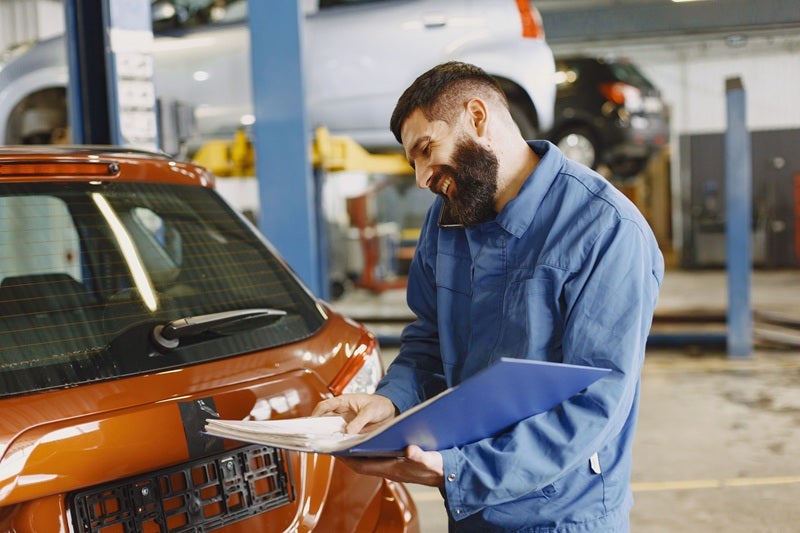
Photo of a smiling auto mechanic inspects a car in a service garage, wearing coveralls and holding documents by Gustavo Fring is licensed with Pexels License.