
Planet Lincoln Love Field

Blog / Lincoln Financing

Understanding Your Lincoln Financing and Lease Options

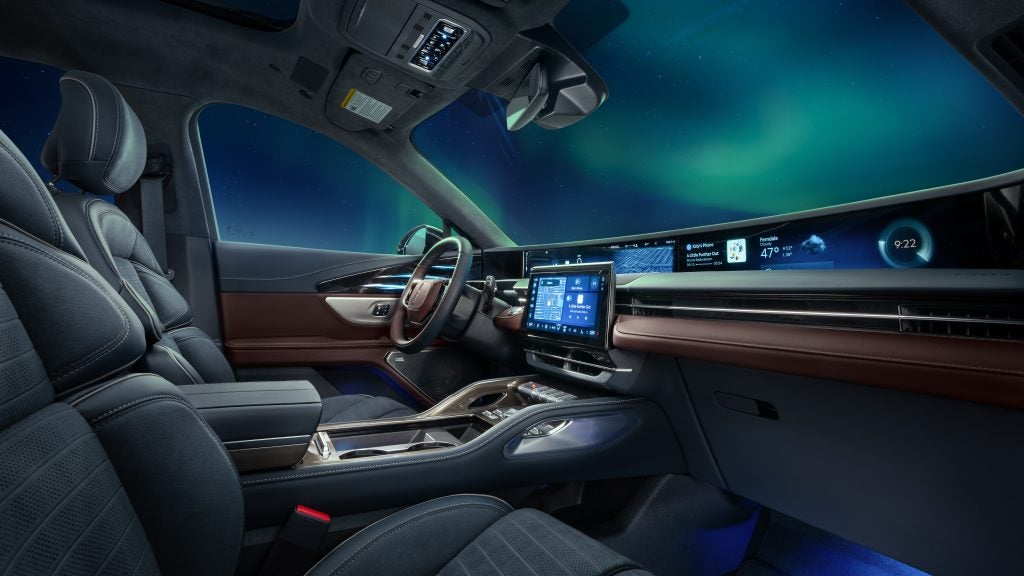
Interior image of the lincoln nautilus black label

When you're ready to get behind the wheel of a new Lincoln, you have two main paths forward: financing the purchase with an auto loan or choosing a Lincoln Red Carpet Lease. The right path depends on your ownership goals, how many miles you drive each year, your credit profile, and your overall budget. At Planet Lincoln Dallas Love Field, we walk Dallas-area drivers through Lincoln financing options every day, and the right choice often comes down to lifestyle as much as it does numbers.


Contact Us


Financing a Lincoln: Loan or Lease?

A Lincoln loan builds toward ownership; every payment chips away at what you owe until the vehicle is yours outright. A Red Carpet Lease generally means smaller monthly payments and the ability to drive a newer Lincoln more often, without the long-term commitment of ownership.

Buyers who plan to keep a vehicle for many years and want to build equity typically lean toward financing. Those who prefer predictable, lower payments and enjoy switching models every few years often find leasing a better fit. Start the conversation early by applying for credit online before you even step onto our showroom floor.


How APR Works on Lincoln Financing

APR, the annual percentage rate, is the yearly cost of borrowing money, including certain fees, expressed as a percentage. It differs from a simple interest rate because it captures more of the true cost of the loan. Under the Truth in Lending Act (TILA), lenders must disclose your APR before you're obligated to the loan, so you can compare offers accurately.

Always compare APR to APR, never APR to a bare interest rate quoted elsewhere. A lower APR generally means less paid over the life of the loan, while a higher one increases total cost. Lincoln financing rates are also risk-based, meaning your credit tier plays a significant role: buyers with excellent or good credit often see more favorable pricing, while those with fair or rebuilding credit may see higher rates. Requirements vary by lender, so it's worth having a candid conversation about where you stand. Manufacturer 0% APR programs occasionally become available, though eligibility and terms shift, so current promotions should always be confirmed directly.


Financing a Lincoln Purchase

Financing a Lincoln purchase through a traditional loan remains the most straightforward path to ownership. You borrow the amount needed to cover the vehicle's cost, minus any down payment or trade equity, and repay it over a set term with interest.

Loan Terms and Structures

Lincoln loan terms usually run 36, 48, 60, or 72 months, though some lenders extend financing up to 84 months. Shorter terms push your monthly payment higher but save you money on interest and build equity faster. Longer terms shrink the monthly bill, but you'll pay more interest overall, and you run a higher risk of owing more than the car is worth, especially in the early years. Many Lincoln loans use simple-interest amortization, so paying extra toward the principal when you can reduces total interest over time.

Down Payments and Trade Equity

A down payment, whether cash, a trade-in, or both, reduces the amount financed and lowers your overall cost. Trade equity from a current vehicle can be applied directly toward your next Lincoln, which is especially useful for trade-up buyers who have been steadily paying down a previous loan.

If you still owe money on a trade-in, rolling that remaining balance into a new loan will affect your total cost going forward. We suggest reviewing the amount borrowed, the APR, the term length, and the resulting payment together before deciding to roll over a balance, rather than looking at any single number in isolation.

As a simple illustrative example only, imagine financing $45,000 with a $5,000 down payment over 60 months. At a hypothetical 6% APR, the monthly payment would land around $773. Stretch the term to 72 months and the payment drops, but total interest paid climbs. This is a rounded, hypothetical scenario meant to show how term length and down payment interact, not a quoted rate.


Leasing a Lincoln With Red Carpet Lease

For many drivers, especially executives who value convenience and a fresh vehicle every few years, a Red Carpet Lease offers a compelling alternative to buying. Popular lease terms run 24 and 36 months, with smaller payments, no trade-in worries at the end of the term, and the perk of driving a newer Lincoln more often. Many Red Carpet Lease agreements also include GAP protection, which can waive the gap between your insurance payoff and outstanding lease balance if required insurance coverage is maintained.

If you're weighing whether to lease a Lincoln, check current offers, since terms shift monthly. Review our featured specials before making a final decision.

Mileage Allowances and Residual Value

Lincoln lease plans start from 5,000 miles per year, with the option to purchase additional mileage at lease start if you know you'll need it. Exceeding your allotted mileage results in per-mile charges outlined in your Red Carpet Lease Agreement, so it's worth being honest about your driving habits, particularly if you commute long distances around Dallas and Love Field regularly.

Residual value, the predetermined worth of the vehicle at the end of the lease term, is set at lease inception and directly drives your monthly payment. Lessors calculate this using guidebooks or market-based estimates, which is why residual values, and the payments tied to them, can vary between vehicles and lease structures.

Potential Lease Fees and Excess Wear Charges

Leases can include a disposition fee at the end of the term, when disclosed in your agreement. Qualifying lessees who lease or finance a new Lincoln or Ford may have this fee waived. A loyalty waiver is also available that can cover the disposition fee and up to $600 in excess wear-and-use charges when you lease your next Lincoln. To use it, you generally need to request the waiver within 60 days of lease termination; it excludes excess mileage charges, isn't transferable, and other conditions apply.

Keeping up with required repairs during your lease term is one of the simplest ways to avoid excess wear charges altogether.

Lease-End Choices

As your Red Carpet Lease approaches its end, you'll generally have three choices: buy the vehicle, return it, or move into a new Lincoln. Whichever you choose, you'll need to sign the federally required Odometer Statement, and all transactions must be completed by your lease-end date. If considering purchasing your leased vehicle, you can log in to your Lincoln Account Manager or contact Lincoln Customer Support for the exact purchase price. When returning a vehicle, bring back key fobs, floor mats, and the Owner's Manual, along with any other original accessories, per your lease agreement. EVs may not be eligible for purchase at lease end, so check your specific agreement if you're leasing a Lincoln EV.


Comparing Total Costs: Loan vs. Lease

Looking at loans and leases side by side often makes the tradeoffs clearer than reading about them separately.


Category

Loan

Lease

Ownership

Payments build equity; once paid off, you keep, sell, or trade the vehicle outright

Payments cover depreciation plus interest; no equity built and no ownership at term end

Payment Structure

Payments go toward total vehicle cost; a down payment reduces the amount financed

Payments tend to be lower on average, allowing a newer car for less upfront

Mileage

No limits or restrictions

Plans start from 5,000 miles/year; exceeding your allotment results in fees

Customization

Vehicle can be customized anytime

Buying offers more flexibility for tinting or wheel upgrades compared to leasing

Equity

Positive equity can apply to your next vehicle's down payment

If market value exceeds residual at lease end, you can buy at residual and keep or resell for profit

Upfront Costs

Cash price or down payment, taxes, registration, and other charges

First month's payment plus refundable security deposit, capitalized cost reduction, registration, taxes, and other fees due at signing

End-of-Term Outcome

You keep the car outright and can keep, sell, or trade it

Turn in the vehicle or buy it at the predetermined price stated in your lease agreement


Texas Tax Treatment for Lincoln Loans and Leases

Texas tax treatment differs meaningfully between Lincoln loans and leases. When you finance a Lincoln purchase, standard Texas sales tax applies at the point of sale and titling, calculated on the vehicle's purchase price.

Leasing works differently. Under an operating lease, the leasing company, not the driver, holds title to the vehicle. Texas tax is imposed on the leasing company's purchase of that vehicle, due at titling and registration, and calculated on the leasing company's purchase price, which may include a fair market value deduction. Because of this structure, no tax is due on your monthly lease payments themselves, which is one reason lease payments often look more favorable on a month-to-month basis.


Choosing the Right Financing Option for Your Goals

The right Lincoln financing option depends on how you drive and what you want from ownership. Families who value predictable, stable payments often gravitate toward loans or fixed-term leases, since both offer consistency in monthly budgeting, while executives who prioritize convenience and enjoy driving a newer model every few years frequently find leasing suits their pace of life better.

Trade-up buyers who want to build equity toward their next vehicle generally favor loans, while shoppers interested in Lincoln Certified Pre-Owned vehicles often find CPO financing offers a lower-cost path into luxury ownership, backed by manufacturer warranty coverage.

Mileage matters too. If you drive long distances regularly, lease mileage limits can become a real obstacle, and buying may better suit your habits, particularly if you're eyeing eventual ownership and are comfortable with higher upfront costs in exchange for long-term savings. Your credit score also plays a role beyond loan APR, factoring into a lease's money factor alongside the vehicle's residual value. And if affording the Lincoln you want would require stretching a loan beyond 60 months, that's often a good signal to seriously consider leasing instead.


Get Personalized Lincoln Financing Options in Dallas

Why Work With Our Team

Every driver's situation is different, and that's why we built our financing process around personalized guidance rather than one-size-fits-all numbers. Planet Lincoln Love Field is one of the largest Lincoln dealerships anywhere, and we've helped Dallas-area drivers work through luxury car financing for years. We know the details of Lincoln loans, Red Carpet Leases, and everything in between.

Our Lincoln Client Relationship Center can walk you through exact current numbers, program eligibility, and available incentives, including general guidance on A/Z Plan, military, and loyalty discounts, without guaranteeing specific savings, since eligibility varies. Financing terms, rates, and incentives are subject to credit approval, lender terms, and manufacturer program changes, so we always recommend confirming current offers directly with our team.

Next Steps

Stop by our dealership at 7767 Lemmon Avenue, Dallas, TX 75209, or reach out to our team to request personalized Lincoln financing options built around your goals, mileage, and budget.


Photo Courtesy of Lincoln
Posted in:

Related Posts

Lincoln SUV parked in a driveway with hedges surrounding it

What Credit Score Do You Need to Finance a Lincoln Vehicle?

There's no magic number that guarantees financing on a Lincoln. Approval comes down to a mix of factors: your income, credit history, debt-to-income ratio, down payment, and whatever guidelines the specific lender you're working with happens to use. A higher score generally gets you better rates, sure, but buyers with all kinds of credit profiles finance Lincolns successfully every day. If you want to see where you stand before setting foot in a showroom, our online finance application will give you a clearer picture of your options. more Most lenders work off the FICO scale, which runs from 300 to 850, though auto lenders sort applicants into their own tiers rather than the general credit categories you might see elsewhere. Buyers near the top usually land the best rates, while those lower down can still get approved, though often at higher interest or with extra conditions attached. And if your own profile doesn't quite hit a lender's threshold, a creditworthy co-applicant can bridge that gap. Contact Us How Auto Lenders Evaluate Your Financing Application Your credit score matters, but lenders rarely stop there. They also weigh income stability, employment history, and your debt-to-income ratio (DTI), which shows how much of your paycheck is already tied up in other obligations. Loan-to-value ratio (LTV), payment-to-income ratio, and how long you've had credit all come into play too. The vehicle itself matters as well. Newer models from established luxury brands like Lincoln tend to hold their value, which lowers the lender's risk and can make approval, or better terms, easier to land. Pair strong credit with steady income and a manageable DTI, and you've got the best possible setup for a smooth financing process. Credit Score Ranges and What Buyers Can Generally Expect Knowing where your score falls helps set realistic expectations before you apply. Auto lenders commonly use these tiers: Credit Score Range Auto Lending Tier General Expectation for Buyers 300–500 Deep Subprime Financing is difficult; typically requires a co-applicant, a substantial down payment, or a specialized subprime lender. Average new-vehicle APRs run around 16%. 501–600 Subprime Financing is available but expensive, averaging roughly 13% APR on new vehicles. Lenders scrutinize DTI and LTV closely. 601–660 Near Prime Approval odds improve, though rates jump noticeably compared to prime, averaging near 10% on new vehicles. 661–780 Prime The most common tier among new-vehicle buyers. Competitive rates and standard terms average around 6.4% APR. 781–850 Super Prime Best available rates, averaging roughly 4.7% APR on new vehicles, and the tier most likely to qualify for promotional offers such as 0% financing when a manufacturer incentive is active on that model. These are general benchmarks, not guarantees. Actual approval, rates, and terms depend on the applicant and the lender. First-Time Buyers First-time buyers run into a specific problem: little or no credit history often gets treated much like poor credit, simply because lenders don't have enough data to judge reliability. A bigger down payment, a creditworthy co-applicant, or solid proof of income and employment can help close that gap. Some lenders will even weigh DTI and payment-to-income ratios when there's no traditional score to look at. Buyers Rebuilding Credit Rebuilding credit doesn't shut the door on financing a Lincoln. You might see higher down payment requirements or steeper rates at first, but consistent, on-time payments on a new loan can move the needle over time. Opening one to three accounts and managing them well, keeping balances low, and checking pre-approval options online are all worth a conversation with our finance team. Financing vs. Leasing: Which Fits Your Credit Profile? Which path is friendlier to a lower credit score depends on the lender. Financing gives lenders more room to restructure a loan around a larger down payment or a longer term, though some argue leasing can be easier to approve because the smaller monthly payment reduces their exposure. What's consistent is that luxury brands set a higher bar than mainstream ones. Most captive lenders want somewhere between 620 and 680 for a lease, but premium brands typically look for 700 or higher, and the best money factors go to applicants above that. And if you're financing over a longer stretch, many lenders look for a stronger credit profile to offset the added risk. Financing gets you to full ownership once the loan's paid off, which makes it the better route if you plan to keep your Lincoln for years and build equity. Leasing usually means a lower monthly payment, since you're only covering depreciation rather than the full purchase price, but it comes with mileage caps and you walk away with nothing at the end. Want to see how current models fit your budget either way? Explore our new Lincoln vehicle lineup before deciding which path suits your situation. Benefits of Getting Pre-Approved Getting pre-approved before you walk into the dealership is one of the smarter moves a buyer can make. It hands you a defined budget and a clear interest rate up front, so there's no guesswork. Pre-approved buyers also move through paperwork faster once they're at the dealership, leaving more time to focus on picking the right vehicle instead of sorting out financing on the spot. Pre-approval puts you in a stronger negotiating position too, since you're not stuck with whatever terms happen to be on the table that day. Our finance team offers online pre-qualification as a low-pressure way to see real terms before you ever step into the showroom. Complete our online finance application whenever you're ready to check where you stand. Steps to Prepare Before Applying Start by pulling your credit report from the major bureaus and looking for errors or outdated information that might be dragging your score down. Disputing inaccuracies before you apply can sometimes bump you into a better tier. Gather your paperwork ahead of time. You'll want proof of identity, income, and insurance, along with your credit report, trade-in documents if you have them, and funds for your down payment. Self-employed applicants should expect to hand over tax returns instead of standard pay stubs. Having all this ready avoids delays and makes you look like an organized, reliable applicant. Ways to Improve Your Approval Odds A handful of practical moves can strengthen your application beyond whatever number shows up on your credit report. A bigger down payment, with 10 to 20 percent a common target, brings your LTV down and reduces the lender's risk. Paying down existing debt improves your DTI. Pulling your credit report and checking for errors before you apply can catch mistakes that might be dragging your score down unfairly. It also pays to shop your application around to a few lenders and compare offers, but timing matters here. Credit scoring models group auto loan inquiries made close together and count them as one, which means several applications in a tight window cost you no more than a single one. Newer FICO versions allow a 45-day window and older versions allow 14 days, while VantageScore uses 14, so keeping all your applications inside a two-week stretch is the safest approach regardless of which model a lender uses. Spreading the same applications across several months is what does the damage. Bringing in a co-applicant is also worth considering if your profile could use the extra support. Trade-In Considerations Trading in your current vehicle cuts down the amount you need to finance, which lowers your LTV and effectively works like part of your down payment. A well-kept trade-in reflects well on your overall profile too. Our finance team can walk you through your trade-in's value and how best to apply it toward your next Lincoln. Checklist: How to Strengthen Your Loan Eligibility Think of this as a pre-application tune-up for your finances: Pay all current bills on time in the months leading up to your application Reduce revolving balances, particularly on credit cards, to lower your utilization ratio Avoid applying for new credit cards or loans in the 60 to 90 days before your auto loan application Save toward a down payment of roughly 10 to 20 percent of the vehicle's price Confirm your employment is stable and consistent Double-check that all financial information on your application is accurate and complete Even small tweaks in preparation can shift your application into a better tier. For guidance tailored to your specific situation, our finance team or a financial advisor can help you map out the right approach. Start Financing Your Lincoln with Planet Lincoln Love Field Why Work With Our Finance Team Planet Lincoln Dallas Love Field, the world's largest Lincoln facility, brings the same care and professionalism to financing that defines the Lincoln brand itself. Located at 7767 Lemmon Avenue in Dallas, TX, the 267,342-square-foot dealership spans six indoor stories and houses a team of finance specialists ready to match your credit profile to the right financing option, whether you're eyeing a new Lincoln Navigator, weighing the Corsair against the Aviator, or looking at a pre-owned model. As a Premier Lincoln Black Label dealer, Planet Lincoln Love Field also offers concierge services and remote delivery for added convenience. Ready to Move Forward? Complete our online finance application to see where you stand, or call 972-634-9082 to speak with our finance team directly. You're also welcome to visit us Monday through Friday from 8:30 AM to 8 PM, or Saturday from 8:30 AM to 6 PM. Approval, terms, and rates vary by applicant and lender, and any figures mentioned here are general industry benchmarks rather than guaranteed offers, so getting pre-qualified remains the most reliable way to see your actual terms before you buy. Photo Courtesy of Lincoln